
 Tiếng Việt

Citation
Bui, V. L. et al. (2026). From Techniques to Systems: Applying the FlowScape Framework to Circular VAC-R Farm Design for Climate-Resilient Livelihoods. CRAFS Practice-Oriented Working Paper. Vietnam National University of Agriculture. Available at SSRN: https://ssrn.com/abstract=6903198.
Disclaimer
This is an author-led, practice-oriented working paper. It is not an official training report, evaluation report, or institutional publication of ICRAF, TUAF, or IFS. The views and interpretations presented are those of the author. Some figures and visual materials are AI-assisted visual learning illustrations developed for pedagogical and methodological purposes.
CRAFS Practice-Oriented Working Paper | Preprint Version | July 2026
This landing page introduces a preprint working paper prepared for professional sharing with partners, donors, research institutions, and relevant development organizations. The full PDF version is temporarily password-protected. A revised journal version will be submitted for official publication.
From Techniques to Systems: Applying the FlowScape Framework to Circular VAC-R Farm Design for Climate-Resilient Livelihoods presents a farm-level training and design approach for circular agrifood systems, climate-resilient livelihoods, and investment-ready local models.
The working paper applies the FlowScape Framework to Circular VAC-R farm design, using the Vietnamese Vườn–Ao–Chuồng–Rừng tradition — Garden–Pond–Livestock–Forest — as an entry point for systems thinking, resource circularity, and climate-resilient livelihood development.
Instead of treating composting, biogas, vermicomposting, bio-products, bio-bedding, water management, livestock feed, and farm value creation as separate techniques, the paper proposes a system-oriented approach. It helps trainers and farmers observe farm components, map resource flows, identify broken loops, select feasible technical options, redesign farm models, and communicate the approach through farmer-oriented training.
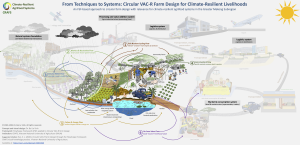
Figure 1. FSF-based conceptual illustration of six circular flows in a Circular VAC-R system (© 2022-2026 Dr. Bui Le Vinh. All rights reserved)
The paper introduces a six-flow analytical lens for Circular VAC-R systems
- Soil–nutrient cycling flow
- Biomass and by-product flow
- Circular water flow
- Feed–livestock flow
- Carbon and energy flow
- On-farm value flow
These six flows are used as a practical framework for diagnosing farm-level circularity and identifying feasible entry points for improvement.
The working paper also presents a training and design methodology that moves from orientation and field observation to flow mapping, diagnosis, technical option selection, farm redesign, and training-back practice. This approach is designed to strengthen trainers’ capacity not only to transfer technical knowledge, but also to facilitate systems thinking and locally adapted farm design.
Illustrative case studies are used to show how Circular VAC-R design can be applied across different contexts, including:
- A small household farm in Dong Hy, Thai Nguyen, with garden, livestock, biogas, vermicomposting, and a weak pond component;
- A larger biological/circular farm in Tuyen Quang without livestock, demonstrating circularity through biological inputs, residue treatment, water management, and on-farm value creation;
- A proposed company-scale Circular VAC-R business model in Chiem Hoa, Tuyen Quang, integrating forestry, fruit trees, ponds, livestock, feed crops, processing, vermicomposting, and market-oriented outputs
The paper argues that Circular VAC-R should not be scaled as a fixed package of technologies. Instead, it should be understood as a learning and design architecture that supports farm diagnosis, local adaptation, climate-resilient livelihood development, private sector engagement, and investment-oriented agrifood systems planning
© 2026 Dr. Bui Le Vinh. All rights reserved.
*Corresponding author
Dr. Bui Le Vinh
Climate-Resilient AgriFood Systems (CRAFS) Research Group, Founder
Department of Land Management | Faculty of Natural Resources and Environment | Vietnam National University of Agriculture
Head of Climate Change & Low-Emission Agriculture | Academy for Green Growth (AGG) | Vietnam National University of Agriculture
Email: blvinh@vnua.edu.vn | bui_le_vinh@yahoo.com
Acknowledgements
This working paper builds on the Circular VAC-R Farm Conceptual Design which is part of the larger umbrella FlowScape Framework (FSF) Concept [1]. This Circular VAC-R Farm Conceptual Design was successfully applied, tested, and refined through the design and delivery of the contracted Training of Trainers course on circular VAC farm, organized by the International Center for Research in Agroforestry (ICRAF) Viet Nam in collaboration with Thai Nguyen University of Agriculture and Forestry (TUAF) and its affiliated Institute for Forestry and Sustainable Development (IFSD), in June 2026. Grateful acknowledgements go to the significant support and contributions of the project team, trainers, facilitators, and participants during the ToT process, which provided an important practice-based foundation for developing this working paper.
Special thanks are extended to Ms. Nguyen Thi Thu Phuong, Mr. Pham Van Yen, and Tam Quy Company for sharing practical farm information, business ideas, and field-based insights that informed the illustrative case studies in this paper. Their experiences helped demonstrate how the Circular VAC-R design approach can be applied across different contexts, including small household farms, larger biological farming systems, and company-scale integrated farm planning. The case studies are used for learning and methodological illustration, and any interpretation, synthesis, or remaining errors are the responsibility of the author.
Appreciations are also expressed to the contributions of participating farmers, Women’s Union representatives, technical teachers, extension officers, enterprises, and local organizations who shared practical knowledge, field experience, and group reflections during the course. Their participation helped shape the learning process, the six-flow analytical lens, and the illustrative applications presented in this working paper.
The views and interpretations expressed in this conceptual working paper do not necessarily reflect the official positions of ICRAF, TUAF, IFSD, the participating individuals and organizations, or their donor partners.
[1] https://ssrn.com/abstract=6694218